|
Enter content here The Constantine Institute |
.
Mentor International
|
 |
|
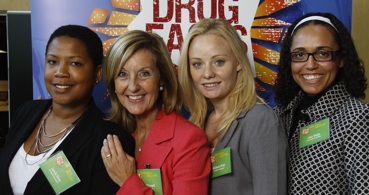
Her Majesty Queen Silvia of Sweden presents the Mentor Foundation International Drug Abuse Prevention Awards The Mentor International Prevention Award 2012 was presented on September 20 during the Mentor International Gala in Washington D.C. at the Four Seasons Hotel. The Award, celebrating achievement and innovation in the prevention of drug abuse among youth, was presented by the Mentor Foundation’s founder and President, Her Majesty Queen Silvia of Sweden. The award is presented every two years to a program chosen from among the most outstanding in the world. This year the Best Practice in Prevention Award went to the Good Behavior Game A program designed by the American Institutes for Research (AIR). The Good Behavior Game (GBG) is a team-based classroom program that helps young children learn verbal behavior skills as they prepare to become students and citizens. AIR works with school districts and communities on all aspects of implementation which includes planning and training teachers, coaches and monitoring practices. Through GBG, children work together to create a positive learning environment. As a strategy, GBG does not compete with instructional time. Yvonne Thunell, Chairman of Mentor International and USA, said that since its foundation, the Mentor awards program has received more than 200 applications from more than 50 countries. “This shows that people all around the world are committed to prevent drug abuse among children and adolescents..” The Mentor Foundation (mentorfoundation.org) is a non-profit, non-government organization, which is unique in its focus on international drug abuse prevention. Mentor was founded in 1994 in Switzerland and has its administrative offices in the United Kingdom with national chapters in Sweden, Lithuania, Germany, UK, Colombia and a recently opened office in Washington D.C. Mentor also has a regional chapter in Lebanon serving 22 Arab League Countries. Terry O’Neill, Director of the Constantine Institute of Albany, NY, said that he was invited to participate “as the result of the esteem in which our patron former New York State Police Superintendent and US Drug Enforcement Administrator Tom Constantine is held throughout the world among people who care about the welfare of children and who wish to promote best practices and evidence-based programs that have been shown to protect children from the effects of mind-altering drugs (defined to include alcohol and tobacco) and all the crime, violence and degradation that they bring.” O'Neill says: "Many of the programs that we have supported in New York at the state and local level over the past two decades have been unsatisfactory and remain scientifically unproven. We owe our children better than we have given them. “ “The opportunity to participate and network with individuals from many nations through the Royal Gala and the Mentor International Prevention Awards helps make contacts with people who have been involved in developing many innovative approaches that have been effective enough to merit international attention and Her Majesty's acknowledgement. By establishing these contacts, I hope that the Constantine Institute may help to bring some of these ideas home to New York where we may adapt them to the needs of our children and ultimately to have a New York program nominated for a future Mentor International Award. That is a goal well worth setting for ourselves. And certainly for one of our most respected and accomplished childrens' charities the Former Troopers' Helping Hands."
|